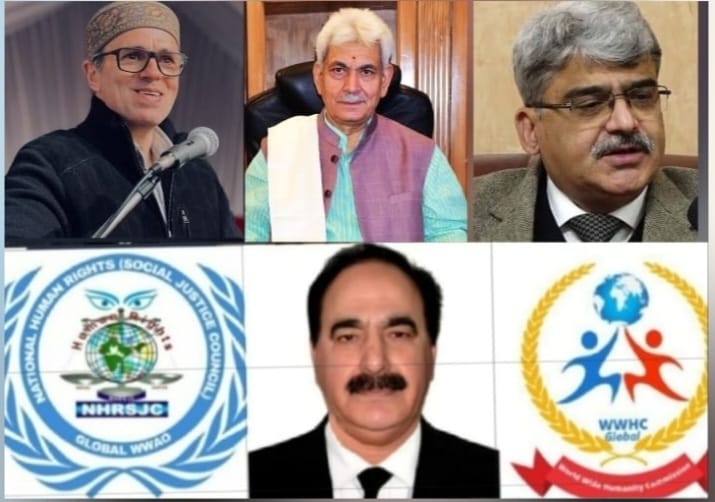
Advocate Zargar Patnavi, Director General of National Human Rights & Social Justice Council of India (Global), Appeals to Chief Minister Omar Abdullah, Lieutenant Governor Manoj Sinha, and Chief Secretary Atal Dulloo to Introduce Smart Bus Services Across All Districts of Jammu and Kashmir
Srinagar, April 19, 2026: Advocate Zargar Patnavi, Director General of the National Human Rights and Social Justice Council of India (Global) has strongly appealed to the Jammu and Kashmir administration to immediately initiate modern smart bus services in every district of the Union Territory. The move aims to significantly ease the daily commuting hardships faced by the common masses, students, patients, women, elderly citizens, and daily wage earners.
In his appeal addressed to Chief Minister Omar Abdullah, Lieutenant Governor Manoj Sinha, and Chief Secretary Atal Dulloo, Advocate Zargar Patnavi highlighted the pressing need for reliable, affordable, safe, and technology-enabled public transport. He noted that the existing transport system in many rural and semi-urban areas remains inadequate, leading to long waiting times, overcrowded vehicles, inflated fares, and safety concerns particularly for vulnerable sections of society.
“Access to efficient public transportation is not merely a matter of convenience; it is a fundamental issue of human rightsand social justice,” said Advocate Zargar Patnavi. “In a region like Jammu and Kashmir, where geography poses unique challenges and a large population depends on public mobility for education, healthcare, employment, and essential services, the absence of modern bus services exacerbates the miseries of ordinary citizens. Smart bus services equipped with GPS tracking, digital ticketing, real-time information, electric or eco-friendly fleets, and better connectivity will bring dignity, reliability, and relief to the people.”
He further urged the government to expand the ongoing smart/electric bus initiatives (currently limited to Srinagar and select routes) to all districts, including remote and hilly areas of Jammu and Kashmir divisions. This would promote inclusive development, reduce dependency on costly private transport, lower pollution, and generate employment opportunities in the transport sector while ensuring last-mile connectivity.